


Achieving balanced proportions and daily comfort in warm weather often begins with understanding garment dimensions and rise heights. Determining where should mens shorts sit depends on two distinct balance points: the rise around the hips or waist and the hemline along the thigh. Many shoppers struggle with waistbands that slide down during movement or hems that bunch awkwardly across the knee. Selecting the proper placement ensures freedom of movement during athletic routines while maintaining clean lines for casual outings. Reviewing our analysis on high-waisted bottom alternatives shows how rise construction fundamentally affects everyday garment comfort.
Different apparel styles offer distinct rise designs, ranging from low-sitting athletic drawstrings to traditional mid-rise button waistbands. Modern casual apparel often integrates flexible waist structures, moisture-resistant synthetics, or linen blends to improve wearability across diverse environments. Clarifying how a waistband settles on your hip bones and where the bottom cuff lands against your leg eliminates common styling mistakes. Exploring functional specifications like inseam length and fabric elasticity makes finding your ideal configuration straightforward.




Complete Guide to Men’s Shorts Fit, Rise, and Hem Placement
Determining where should mens shorts sit requires assessing both the vertical rise at the waist and the bottom hem position along the leg. When a pair sits correctly, it flatters your natural proportions, stays anchored without pinching, and offers unrestricted leg mobility. Getting this balance right avoids both the sloppy look of sagging fabric and the discomfort of excessive tightness through the seat.
The Two Anchor Points: Waist Rise and Hemline Position
Every pair of shorts relies on two primary physical contact zones to define its overall silhouette. The first zone is the waist rise, which determines whether the top band rests at the natural waist, across the mid-hips, or lower on the pelvic bone. The second zone is the leg opening, which dictates whether the hem lands high on the quad, just above the kneecap, or directly over the knee joint.
A proper fit occurs when these two measurement zones work in harmony with your individual anatomy. If a pair sits too low on the hips, the crotch tends to drop, which restricts stride length and creates excess bulk. Conversely, pulling a low-rise short too high causes uncomfortable pulling across the groin and distorts the intended hemline.
Determining Waistband Placement: Natural Waist vs. Hips
Traditional tailoring generally places trouser waistbands near the natural waist, just below the navel. In modern casual menswear, however, most garments are engineered as mid-rise or low-rise options designed to rest directly across the iliac crest of the hip bones. For instance, the Lee Men’s Extreme Motion Flat Front Short Original is explicitly specified to sit lower on the waist, creating a relaxed yet neat profile.
Deciding where your waistband should sit depends primarily on your body structure and the garment rise. A mid-rise cut usually anchors approximately one to two inches below your belly button, providing secure coverage during bending and seated tasks. Low-rise cuts sit firmly on the hips, which works well for casual wear but demands a reliable waistband to prevent slipping downward throughout the day.
If you frequently experience sagging, the issue often stems from wearing a garment designed for the natural waist down on the hips. When the cut does not match your preferred resting height, fabric folds collect around the rear and thighs. Verifying whether a garment is built for mid-rise or lower-rise placement ensures the seat remains smooth and comfortable.
Inseam Variations and Ideal Hemline Targets
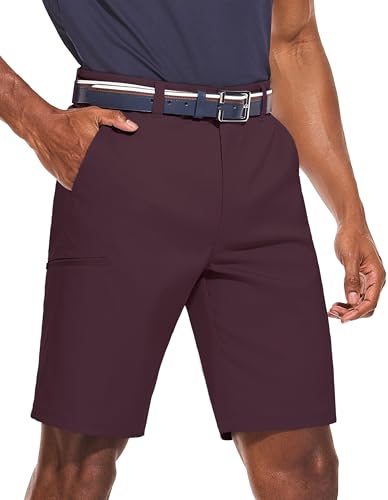
Inseam measurement directly establishes where the lower edge of the garment falls on your thigh or knee. A classic ten-inch inseam, found on the PULI Men’s Golf Shorts 10 Inch Inseam Quick Dry, is engineered to hit near the knee for average-height wearers. This longer profile delivers traditional coverage favored in professional golf settings, conservative social gatherings, and casual office environments.
Shorter inseams measuring between seven and nine inches terminate one to three inches above the kneecap, creating a clean vertical visual line that elongates the appearance of the legs. Meanwhile, five-inch and six-inch profiles land squarely at the mid-thigh area, offering maximum ventilation and freedom of movement for athletic routines. Deciding between these lengths depends on personal comfort, setting appropriateness, and how much leg exposure you prefer.
Balancing Proportions Across Different Heights and Builds
Height plays a massive role in how a documented inseam actually aligns with your knees. A ten-inch inseam that hits neatly above the knee on a six-foot-two individual will often drape well past the kneecap on someone standing five-foot-seven. When a hem extends past the bottom of the knee, it visibly cuts the lower leg in half, creating a noticeably shorter visual appearance.
Shorter men generally benefit from aiming for hems that rest two to three inches above the knee joint. This proportion exposes more of the quadriceps, helping the lower body look balanced and upright. Taller men, by contrast, can easily wear longer nine-inch or ten-inch cuts without appearing overwhelmed by excess cloth.
Body build also influences fabric drape and horizontal tension across the thighs and glutes. Athletic frames with muscular quads need enough room in the leg openings to prevent the hem from riding upward during activity. Looking closely at supportive athletic bottom designs highlights how ergonomic patterning and proportional cutaways accommodate broader muscular builds without bunching.
Activity Demands and Dynamic Garment Placement
Where your shorts sit when standing stationary in a dressing room is rarely where they remain during active physical movement. Golfers need garments that stay anchored through torso rotation without pulling at the lower back or exposing the tucked shirt tail. The PULI golf shorts use a tricot-lined flexible waistband specifically designed to grip shirt fabric and prevent creeping during a golf swing.
Cardio workouts, jogging, and gym sessions present entirely different mechanical challenges for fabric placement. High-repetition knee flexion causes loose, long hems to repeatedly slap against the patella, which can become irritating over several miles. Activewear shorts solve this by sitting securely on the hips with an elastic drawstring while keeping the hem well clear of the knee joint.

Casual lounging and beach settings prioritize breathability and relaxed drape over strict positional anchoring. Garments like the Comdecevis Men’s Casual Linen Shorts Elastic Waist are made for warm-weather leisure where an easygoing drawstring waistband lets the wearer adjust rise height on the fly. In these relaxed settings, sitting slightly lower on the hips feels natural and unconstraining.
Waistband Engineering: Drawstrings, Elastic, and Flex Bands
The construction method of the waistband dictates how securely the garment maintains its position throughout the day. Elastic waistbands with drawstrings provide customizable tension, allowing you to cinch the garment higher or lower depending on activity. The STICKON Men’s Casual Shorts Lightweight Elastic combine an elastic band with a leather-tipped drawstring, ensuring an adaptable fit that accommodates natural posture changes.
Tailored flat-front styles typically rely on fixed waist measurements or engineered flex bands rather than external cords. The Lee Extreme Motion shorts utilize a hidden flex waistband paired with a standard button closure and zipper fly. This engineering gives the appearance of a crisp dress short while flexing as you bend, sit, or reach.
Elastic channels that lack an adjustable drawstring can present sizing challenges if your waist falls between standard brackets. Garments offering broad fit ranges, such as the QPNGRP Mens Shorts Casual Drawstring Zipper covering waist sizes 28 through 48, depend heavily on internal drawcords to stabilize the rise. A well-adjusted cord prevents the weight of stored essentials from pulling the waistband downward.
Fabric Blends and Their Influence on Drape and Grip
Textile choice influences how a short behaves, drapes, and retains its position on the body. Pure synthetic fabrics, such as the 100 percent polyester used in the STICKON casual shorts, offer lightweight breathability and minimal moisture retention. Because synthetics do not absorb heavy sweat, the waistband avoids waterlogging, which helps the shorts stay anchored at your hips during hot summer days.
Linen and cotton blends behave differently due to their natural fiber characteristics and reduced elasticity. The Comdecevis casual shorts incorporate an 80 percent cotton and 20 percent linen composition without synthetic stretch fibers. This creates a lightweight, skin-friendly structure that drapes in crisp folds rather than clinging to the thighs, though it requires an accurate initial fit across the seat.
Adding small percentages of elastane or spandex introduces elastic recovery to natural fiber weaves. The JustSun Mens Shorts Casual Classic Fit Cotton utilize a blend of 60 percent cotton, 35 percent linen, and 5 percent spandex. That five percent spandex component allows the washed twill to stretch during movement without pulling the waistband out of place or distorting the leg profile.
Pocket Configuration and Weight Distribution
Pocket engineering directly affects whether your shorts stay at their intended resting height once loaded with personal gear. Stashing heavy smartphones, wallets, and keys into loose side pockets pulls the waistband down toward the hips. Modern utility designs address this by distributing compartments across multiple reinforced zones to balance the physical load evenly.
The PULI golf shorts incorporate six dedicated storage areas, including deep slant pockets, rear welt compartments, and a zippered leg compartment. Placing heavy devices in dedicated side or thigh pockets keeps the weight from bouncing against the knee or yanking the front waistband. Secure zipper closures also prevent stored items from shifting abruptly and unbalancing the garment during vigorous strides.
For running or beach walks, specialized card slots and zippered closures offer superior security compared to shallow open pockets. The QPNGRP casual shorts integrate zipper pockets into a breathable stretch frame, keeping small essentials locked securely against the thigh. When gear stays anchored close to the body, the shorts remain stable at the waist without requiring constant adjustment.
Diagnosing Fit Problems and Preventing Waistband Creep
The most frequent mistake in men’s summer wardrobe selection is choosing an inseam that causes the hem to drape awkwardly across the middle of the kneecap. A hem that constantly brushes the patella causes friction during walking and bunches when sitting. Shifting up to an eight-inch or nine-inch inseam immediately clears the joint, improving comfort and visual proportion.
Another widespread issue is waistband rolling, where the top band folds over on itself during wear. This problem typically indicates that the short is sitting too high on the abdomen, causing natural torso bends to crease the fabric. Lowering the band by an inch so it rests naturally across the upper hip bones usually solves the rolling issue completely.
Excessive bagginess through the leg opening can also ruin the visual balance of otherwise well-fitting shorts. If the leg openings flare outward like a bell, the shorts create an unflattering silhouette regardless of where they sit. Opting for a straight or tapered leg profile ensures the fabric frames the quadriceps neatly without billowing in the breeze.
Practical Sizing Checks for Balanced Comfort
Before committing to a specific pair of shorts, several quick posture checks can confirm whether the rise and hemline are positioned properly. Stand naturally in front of a full-length mirror and observe where the waistband settles without holding your breath or pulling the fabric upward. If the top edge rests evenly on your hips without pinching or gapping, the rise height matches your build.
Next, perform a deep knee bend or sit down in a firm chair to evaluate dynamic comfort through the seat and thighs. The front crotch should not pull tight against your groin, and the waistband should remain secure across your lower back without pulling downward. If the shorts ride up excessively or dig into your stomach while seated, sizing up or choosing a higher rise will restore balanced comfort.
Finally, inspect the hemline position while standing straight with your arms relaxed at your sides. For standard modern proportions, the hem should rest cleanly between one and two inches above your kneecap, revealing the knee entirely. Confirming these key visual and physical markers ensures your shorts deliver dependable comfort and crisp style across every summer occasion.


Write Your Review
No reviews yet. Be the first to share your experience!