


Finding the right hemline on office trousers often feels like a balancing act between polished style and everyday practicality. Hemlines dragging on wet pavement or pooling haphazardly over work shoes instantly ruin an otherwise sharp professional outfit. Knowing where should dress pants fall women depends directly on trouser silhouette, fabric drape, and the specific shoes worn throughout the workday. When slacks sit at the correct height, they flatter your frame, protect your hemlines from fraying, and create an elongated vertical line.
Modern workwear blends traditional suiting cuts with flexible stretch fabrics, making hem length more critical than ever. Whether styling classic straight trousers, flowing wide legs, or modern pull-on stretch slacks, understanding proper break points helps you look put-together. Insights from our stretch knit comfort guide illustrate how flexible knits drape differently than stiff woven suiting. With accurate inseam measurements and smart shoe coordination, achieving the ideal trouser drop becomes simple and repeatable.


Mastering Hem Length, Trouser Breaks, and Proper Fit for Women’s Dress Pants
Selecting the exact hemline for women’s trousers is both an art and a science. When slacks fall too short, they look unintentionally shrunken, while slacks that are too long bunch messily over your instep or sweep the floor. Resolving the question of where should dress pants fall women requires matching your trouser leg silhouette to your footwear while respecting how the textile drapes. By examining standard trouser breaks, silhouette specifications, and fabric mechanics, you can achieve clean lines across every pair of slacks in your wardrobe.
Defining Trouser Breaks: Full Break, Half Break, Quarter Break, and No Break
In traditional tailoring, the term break refers to the visible crease or fold created where the bottom of the trouser leg meets the top of the shoe. Understanding this fundamental concept gives you total control over how formal or modern your pants appear. Tailors categorize breaks into four distinct levels: full break, half break, quarter break, and no break. Each break communicates a different style aesthetic and suits specific trouser widths.
A no-break hemline sits cleanly at the top of the shoe collar without creating any horizontal fold in the fabric. This contemporary aesthetic produces a crisp, uninterrupted vertical drape that looks exceptionally sharp on slim, tapered, and cropped trousers. A quarter break, sometimes called a slight break, occurs when the hem gently brushes the instep of the shoe, producing a very subtle, shallow ripple. It remains one of the most versatile choices for professional attire because it offers timeless polish without excess fabric pooling.
A half break represents the classic standard for traditional business suiting. The front of the trouser leg develops a distinct, single horizontal fold as it rests firmly on the shoe instep, while the back hem falls roughly midway down the heel counter. A full break features a deep, pronounced fold with substantial extra fabric resting on the shoe. While common in vintage menswear, a full break is rarely recommended for women’s modern professional trousers because it can visually shorten the legs and appear unkempt.
Where Straight-Leg Dress Pants Should Fall
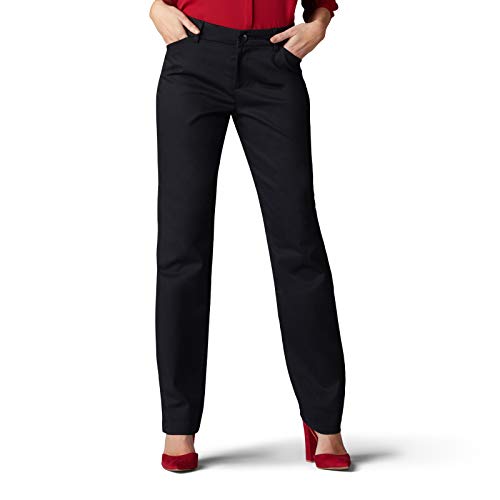
Straight-leg slacks maintain a consistent width from the knee down to the ankle opening, creating a balanced, universally flattering profile. For this classic cut, the ideal hemline should feature either a slight quarter break or hover approximately one-half to one inch above the floor when you wear your chosen shoes. At this length, the fabric falls straight down without bowing inward or flaring outward awkwardly at the ankle.
When straight-leg trousers are hemmed too high, they lose their clean vertical geometry and can resemble ill-fitting high-water slacks. Conversely, allowing straight legs to drag on the floor leads to frayed hems, heel catching, and messy fabric accordioning over the laces or vamp. The back of the hem should hit roughly halfway down the heel of your shoe, creating a sleek downward angle from front to back.
Evaluating pull-on stretch slacks, such as the AB-Eleven Womens Straight Leg Dress Pants Stretchy, demonstrates how modern knit fabrics influence this drop. Featuring a lightweight 96% polyester and 4% spandex blend, these pants offer four-way stretch and fluid drape that moves naturally with your stride. Because the straight silhouette has subtle front pleats and no rigid side seams, keeping the hem around one-half inch off the ground ensures the fabric drapes cleanly over flats or low heels without catching on shoe hardware.
Wide-Leg and Flare Trouser Hem Rules
Wide-leg trousers and flared slacks follow strict tailoring parameters because their visual appeal relies on dramatic, uninterrupted vertical lines. As a golden rule, wide-leg dress pants should fall roughly one-quarter to one-half inch above the floor with your shoes on. This ultra-close clearance creates an elegant sweeping effect that elongates the entire body, making your legs appear noticeably longer.
Hemming wide trousers too short is one of the most common workplace styling errors. If a wide-leg pant hovers two or three inches above the ground, the wide leg opening floats midair, creating a boxy, chopped silhouette that disrupts the fluid line of the outfit. You want the trouser leg to conceal the majority of your shoe, revealing only the front toe box or pointed tip as you walk.
Because wide-leg hems skim so close to the pavement, you must commit to a specific heel height before committing to an alteration. A pair hemmed for three-inch pumps will drag on dirty sidewalks if paired with pointed flats. If you prefer switching between flats and heels, consider having dedicated wide-leg pants for each shoe category to keep the bottoms pristine.
Ankle, Tapered, and Cropped Slacks Hem Placement
Ankle-length and tapered cigarette pants remain workplace essentials because they look sharp, modern, and youthful. For these closer-fitting silhouettes, the hem should fall precisely at or just above the prominent ankle bone. There should be absolutely zero break at the hemline; the fabric should hang straight and clear of the shoe opening completely.
Tapered slacks that are cut too long will bunch around the ankles, creating an unflattering wrinkled effect that ruins the slim tailoring. Because the leg opening is narrow, excess fabric cannot drape over the shoe, so it simply collapses onto itself. Leaving a clean sliver of space between the pant hem and the top of the shoe keeps the ankle area neat and intentional.

Cropped dress pants typically hit one to two inches above the ankle bone, resting at the lower calf. This cut highlights statement footwear such as slingback pumps, loafers with decorative hardware, or lace-up brogues. The key to wearing cropped and ankle trousers successfully is ensuring the hem finishes at a flattering, narrow section of the lower leg rather than cutting across the widest point of the calf.
Pairing Trousers with Footwear: Heels, Flats, Loafers, and Sneakers
Your shoe choice exerts the single greatest influence over where your dress pants should fall. When wearing classic pointed pumps or block heels, the added elevation raises your hemline, meaning your pants must be longer to maintain a proper slight break or skimming profile. Pointed toes work exceptionally well with trousers because the elongated toe structure guides the pant hem smoothly over the instep.
Flats and penny loafers require pants tailored with minimal to no break. Because flat shoes sit close to the floor, any extra pant length easily touches damp ground or gets caught under your heel while walking. Reviewing our everyday stretch pants review highlights how versatile bottoms adapt to low-profile footwear without fabric dragging. When styling loafers, aim for the hem to skim the upper tongue of the shoe without buckling.
Commuter sneakers and casual dress shoes have become common staples in modern business casual environments. When wearing sneakers with work pants, opt for a clean no-break or cropped cut so the pant cuff hovers above the shoe collar. Avoid allowing wide or straight hems to swallow bulky athletic soles, as this creates an unbalanced, overly casual aesthetic that diminishes your professional attire.
How Fabric Drape and Stretch Knit Blends Alter Hem Behavior
The physical composition of your trousers changes how the fabric behaves under gravity. Traditional suiting wools and rigid twills have substantial body, holding crisp ironed creases that support structured breaks at the instep. In contrast, modern work slacks increasingly utilize synthetic stretch knits, such as four-way stretch polyester and spandex blends, to deliver activewear comfort with office-appropriate tailoring.
Stretch knits drape with fluid softness rather than rigid architecture. A flexible blend like 96% polyester and 4% spandex, found in the AB-Eleven work slacks, flows around the body and falls naturally downward without stiff resistance. If a stretch knit pant is too long, the pliable material pools softly rather than holding a crisp fold, making correct hem placement essential for maintaining a tailored appearance. Our tailored athletic slacks analysis explains how technical stretch fibers maintain shape recovery across long hours of sitting without bagging at the knees.
Heavy cotton knits and cotton-rich blends present another unique factor: moisture absorption and relaxation. Natural cotton fibers can relax slightly throughout the day as body heat and movement loosen the yarn tension, causing pants to drop a fraction of an inch by late afternoon. Synthetic stretch knits, on the other hand, resist moisture-induced sagging, ensuring that where the hem rests at eight in the morning remains consistent throughout your commute home.
Measuring Your Inseam Correctly for Different Shoe Heights
Accurate measurements prevent costly alteration mistakes and ensure you order the right pant length initially. To measure your inseam properly, stand barefoot or in your target shoes on a flat, hard surface with your feet roughly shoulder-width apart. Maintain upright posture with shoulders back and eyes forward, as bending down to read the tape alters your pelvic tilt and shortens the measurement.
Using a flexible measuring tape, measure from the lowest center seam of the crotch straight down the inner thigh to your desired hem termination point. If you plan to wear straight-leg slacks with two-inch heels, wear those exact shoes and measure to approximately one-half inch above the floor. If you are measuring for ankle pants, run the tape directly to the center of your ankle bone.
Take rise height into consideration when evaluating overall fit. High-waisted pants with elastic pull-on waistbands sit higher on your natural torso, which pulls the crotch seam snugly upward and can subtly raise the bottom hem. Conversely, mid-rise or low-rise trousers sit lower on the hips, allowing the pant leg to sit lower on your shoes. Always verify manufacturer inseam charts against your own measured numbers before purchasing.
Tailoring Solutions, Temporary Fixes, and Garment Care Longevity
Professional tailoring remains the most permanent way to achieve a custom hemline. Tailors typically use a blind hem stitch for dress trousers, which secures the folded fabric inside the leg opening without creating visible stitch lines on the outside. When altering stretch knit slacks, request a flexible blind stitch or slight chain stitch so the seam stretches comfortably without snapping under movement.
If you need an immediate adjustment without visiting a tailor, temporary options can save an outfit. Double-sided apparel tape works well for turning up hems an inch or two for an unexpected flat-shoe day, provided the fabric is clean and oil-free. Magnetic hem clips and iron-on fusible bonding tape also provide quick remedies, though bonding tape can become permanent and should be tested on an inconspicuous seam first.
Garment care also plays a direct role in maintaining correct hem position over time. Always wash new pants before taking them to a tailor for permanent alterations, as initial laundering can cause subtle fabric settling. Synthetic blends like polyester-spandex resist shrinkage in cold water, while cotton-blend trousers should be air-dried to prevent heat-induced vertical shrinkage that turns full-length pants into unintentional ankle slacks.
Finding the exact point where dress slacks should fall comes down to pairing leg silhouette with appropriate footwear and fabric characteristics. By aiming for a slight break on straight trousers, skimming clearance on wide-leg styles, and a clean ankle crop on tapered cuts, you ensure balanced proportions every day. Investing a few minutes to check your inseam against your preferred shoes guarantees that your dress slacks project confidence, comfort, and effortless workplace sophistication.



Write Your Review
No reviews yet. Be the first to share your experience!